Bumper Repair vs. Bumper Replacement in Duluth, GA: How to Know What Your Car Really Needs
A damaged bumper is one of the most common results of a car accident.
Sometimes the damage looks minor: a scrape, dent, crack, or loose corner.
Other times, the bumper looks badly crushed and obviously needs more extensive repair.
But what many drivers do not realize is that the visible bumper cover is only one part of the system.
Modern bumpers may also involve reinforcement bars, energy absorbers, mounting brackets, parking sensors, blind-spot sensors, cameras, radar components, wiring, air ducts, grilles, and trim pieces.
That means a bumper that looks repairable from the outside may still have hidden damage underneath.
For drivers in Duluth, GA and Gwinnett County, the safest way to determine whether a bumper should be repaired or replaced is to have the vehicle professionally inspected.
At Roland Auto Collision Repair LLC, we evaluate both visible and hidden collision damage so the repair decision is based on the actual condition of the vehicle.
Here is what drivers should know about bumper repair versus bumper replacement.
What Is a Modern Car Bumper Made Of?
When most people say “bumper,” they are usually referring to the painted plastic outer cover.
But the complete bumper assembly may include several parts.
The bumper cover is the painted exterior section you see. It is commonly made from flexible plastic and is designed to help with appearance, aerodynamics, and low-speed impact protection.
Behind the bumper cover may be foam or another energy-absorbing material designed to help manage impact forces.
The reinforcement bar is a stronger structural component behind the bumper cover. It may be made from steel, aluminum, or another strong material.
The bumper assembly is connected to the vehicle using brackets, clips, retainers, fasteners, and structural mounting points.
Modern vehicles may place important driver-assistance technology directly behind the bumper. This may include parking sensors, blind-spot monitoring sensors, radar modules, backup cameras, and cross-traffic sensors.
This is why bumper repairs have become more complex than they were years ago.
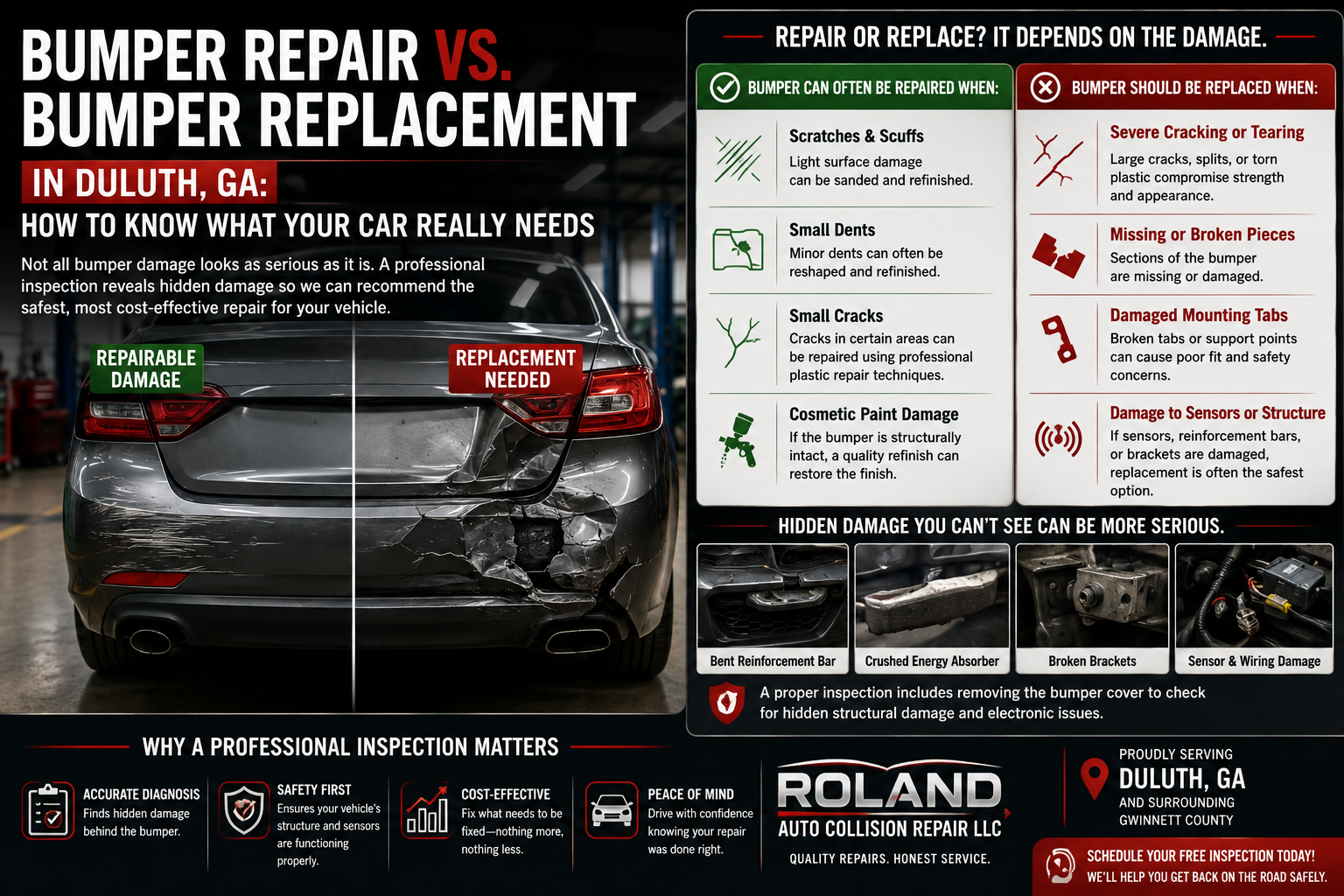
When Can a Bumper Be Repaired?
Not every damaged bumper needs to be replaced.
Depending on the type and severity of damage, repair may be possible.
Minor scratches and scuffs can often be repaired through sanding, surface preparation, refinishing, and paint blending. If the plastic is not deeply damaged and the bumper still fits correctly, replacement may not be necessary.
Small dents in plastic bumpers can sometimes be reshaped depending on location, depth, plastic condition, paint damage, and whether the material is stretched. A technician can determine whether the shape can be restored properly.
Small cracks may be repairable using professional plastic repair methods. However, the decision depends on crack length, crack location, whether mounting points are damaged, whether the material has been severely stretched, and whether the repair would remain structurally reliable. A crack near a mounting tab can be very different from a crack in a less stressed section of the bumper cover.
Cosmetic paint damage may be best addressed with refinishing if the bumper is structurally intact. Professional refinishing may involve surface preparation, repairing scratches, applying primer, color matching, applying basecoat, applying clearcoat, and polishing. The goal is for the repaired area to blend naturally with the surrounding vehicle.
When Does a Bumper Need to Be Replaced?
Replacement is often recommended when repair would not restore the bumper properly.
Severe cracking is a common reason. A heavily cracked or split bumper cover may no longer be a good candidate for repair. If multiple cracks are present, replacement may be more reliable.
Torn or missing plastic is another sign. If large sections of the bumper are torn away, replacement is often the better choice.
Damaged mounting tabs can cause loose bumper corners, uneven gaps, rattling, and poor alignment. Some tabs can be repaired, but severely damaged mounting areas may require replacement.
Significant deformation may mean the bumper cover has been badly stretched or distorted. It may not return to its original shape. Even if it can be forced into position, the surface may remain visibly uneven.
Damage near sensors matters because modern vehicles may have radar and sensors mounted in or behind the bumper. Improper repair thickness, incorrect positioning, or bumper distortion can potentially interfere with these systems.
Damage to the reinforcement structure should also be taken seriously. If the reinforcement bar or mounting structure is damaged, the repair becomes more than a cosmetic bumper job. These components should be inspected carefully after a meaningful impact.
Does a Cracked Bumper Always Need Replacement?
No. Some cracks can be professionally repaired. However, not every crack should be repaired.
A technician should consider plastic type, crack length, location, mounting damage, whether the plastic is distorted, vehicle manufacturer repair procedures, and the presence of sensors or radar.
The goal is not simply to make the crack disappear. The repair should also restore proper fit and function.
Can a Dented Plastic Bumper Be Fixed?
Sometimes. Plastic bumpers can often deform during a low-speed impact. If the plastic is not torn or permanently stretched, a technician may be able to reshape it.
However, simply pushing a dent outward does not always complete the repair. The bumper may still require sanding, filling, surface preparation, paint matching, and refinishing. Professional repair addresses both shape and finish.
Hidden Damage Behind a Bumper
This is one of the biggest reasons drivers should have bumper damage inspected.
A low-speed collision can damage components hidden behind the bumper cover.
Possible hidden damage includes a crushed energy absorber, bent reinforcement bar, broken brackets, damaged wiring, sensor damage, cracked mounting points, air duct damage, trunk or hatch damage, radiator support damage, and exhaust damage.
The outside of the bumper may not reveal everything.
Front Bumper Damage vs. Rear Bumper Damage
The location of the impact matters.
A front-end impact can potentially affect the grille, headlights, fog lights, radiator support, cooling components, radar sensors, hood alignment, and fender alignment.
A rear impact can potentially affect the trunk, liftgate, rear body panel, exhaust, parking sensors, blind-spot sensors, backup camera system, and quarter panels.
That is why the complete impact area should be inspected rather than focusing only on the bumper cover.
Can a Bumper Be Repaired Without Repainting?
If the damage does not affect the paint, sometimes. But most scratches, cracks, gouges, and repaired dents require refinishing.
A quality repair should aim to match color, metallic orientation, gloss, texture, and reflectivity. Automotive paint matching can be especially challenging on older vehicles because the current paint may have changed slightly from sun exposure and age.
How Is Bumper Paint Matched?
Collision shops may use manufacturer paint codes, digital color tools, spray-out cards, tint adjustments, and blending techniques.
The paint code provides a starting point, but exact color matching may require additional adjustment. This is particularly important with metallic colors, pearl finishes, tri-coat paint, and older paint finishes.
OEM vs. Aftermarket Bumpers
Replacement parts may come from different sources.
OEM bumpers are produced by or for the vehicle manufacturer and are designed around original specifications.
Aftermarket bumpers are manufactured by companies other than the original vehicle manufacturer. Quality can vary by supplier. Potential differences may include fit, material, mounting holes, finish, and sensor compatibility.
Recycled original parts are previously installed OEM components from another vehicle.
The appropriate choice depends on the vehicle, insurance policy, part availability, repair plan, and manufacturer guidelines.
Will Insurance Pay for Bumper Repair?
Collision-related bumper damage may be covered depending on who was at fault, your insurance policy, your deductible, your coverage type, and the claim circumstances.
The insurance company may write an initial estimate based on visible damage. However, hidden damage may not be discovered until the bumper is removed. This can lead to a supplement.
What Is an Insurance Supplement?
A supplement is an additional repair request submitted after hidden damage is discovered.
For example, the insurance estimate may initially include the bumper cover, paint, and labor. After disassembly, the collision shop might discover a bent reinforcement bar, broken bracket, damaged sensor, or crushed absorber. The shop can document the additional damage and submit it to the insurer for review.
Supplements are common because many collision-related problems cannot be seen before disassembly.
How Much Does Bumper Repair Cost in Duluth, GA?
There is no single bumper repair price.
Cost depends on damage severity, repair vs. replacement, vehicle make and model, paint color, labor, part type, sensor equipment, hidden damage, and calibration requirements.
A simple scratch repair is very different from replacing a bumper assembly containing radar sensors and additional structural components.
Does a New Bumper Need ADAS Calibration?
Possibly. Many modern vehicles use sensors installed behind the bumper, inside the bumper, near the grille, or at bumper corners.
Depending on the vehicle and repair procedure, calibration may be required after sensor removal, sensor replacement, bumper replacement, collision damage, or alignment changes. Manufacturer repair procedures should guide the decision.
Why ADAS Calibration Matters
Advanced Driver Assistance Systems may control features such as blind-spot monitoring, rear cross-traffic alert, adaptive cruise control, automatic emergency braking, and parking assistance.
If a sensor is not positioned correctly, system performance may be affected.
How Long Does Bumper Repair Take?
Repair time depends on parts availability, damage severity, paint work, insurance approval, hidden damage, calibration, and shop workload.
A cosmetic repair may be relatively straightforward. A larger repair involving structural parts and electronics can take longer.
Can I Drive With a Damaged Bumper?
Minor cosmetic damage may not make the vehicle unsafe. However, you should avoid driving if the bumper is dragging, parts are loose, lights are damaged, tire clearance is affected, sharp pieces are exposed, warning lights appear, sensors malfunction, or exhaust components are damaged.
If you are unsure, have the vehicle inspected.
Bumper Damage and Vehicle Resale Value
Poorly repaired collision damage can affect resale value.
Potential issues include visible paint mismatch, uneven panel gaps, loose bumper corners, warning lights, sensor issues, poor-quality paint, and unrepaired hidden damage.
A proper repair helps preserve both appearance and function.
Why Professional Bumper Repair Matters
A bumper repair is not only about making the car look better. The repair may involve fit, alignment, electronics, sensors, structural components, and paint refinishing.
A professional collision shop evaluates the complete area instead of treating the bumper as an isolated cosmetic panel.
Need Bumper Repair in Duluth, GA?
If your vehicle has a cracked, dented, scraped, or loose bumper after an accident, Roland Auto Collision Repair LLC can inspect the damage and explain whether repair or replacement makes the most sense.
We serve drivers throughout Duluth, Gwinnett County, and surrounding areas with professional collision and auto body repair.
Whether your damage is cosmetic or involves hidden components behind the bumper, a proper inspection can help prevent important issues from being missed.
Contact Roland Auto Collision Repair LLC today for a collision repair estimate in Duluth, GA.
Frequently Asked Questions
Can a cracked plastic bumper be repaired?
Sometimes. Repairability depends on the crack's size, location, plastic condition, and whether mounting areas or sensor locations are affected.
Is it cheaper to repair or replace a bumper?
Repair is often less expensive when damage is limited, but severe cracks, deformation, or structural damage may make replacement the better option.
Can hidden damage exist behind a bumper?
Yes. Reinforcement bars, absorbers, brackets, wiring, and sensors can all be damaged even when the bumper cover does not look severely damaged.
Will a replaced bumper match my paint?
A professional collision shop should carefully color-match and refinish the replacement bumper to blend with the vehicle.
Does insurance cover bumper damage?
It may, depending on your coverage and the circumstances of the accident.
Do bumper sensors need calibration after repair?
Some vehicles require calibration after certain collision repairs or sensor-related work. Manufacturer procedures determine what is needed.
Need Collision Repair in Duluth?
Roland's Auto Collision is here to help with honest estimates, quality workmanship, and insurance claim assistance.