Car AC Not Working After an Accident? 7 Possible Causes for Suwanee, GA Drivers
Was your car's air conditioning working perfectly before an accident, but now it blows warm air or doesn't work at all?
Many drivers assume that collision damage only affects the exterior of their vehicle. However, even a relatively minor front-end accident can damage important components underneath the hood, including parts of your vehicle's air conditioning system.
For drivers in Suwanee, GA, understanding how a collision can affect your car's AC system can help you recognize hidden damage and determine when a professional collision repair inspection is necessary.
At Roland Auto Collision Repair LLC, we help drivers throughout Duluth, Suwanee, Lawrenceville, Johns Creek, Norcross, and surrounding Gwinnett County communities identify and repair accident-related vehicle damage.
Here are seven possible reasons your car's air conditioning may stop working after an accident.
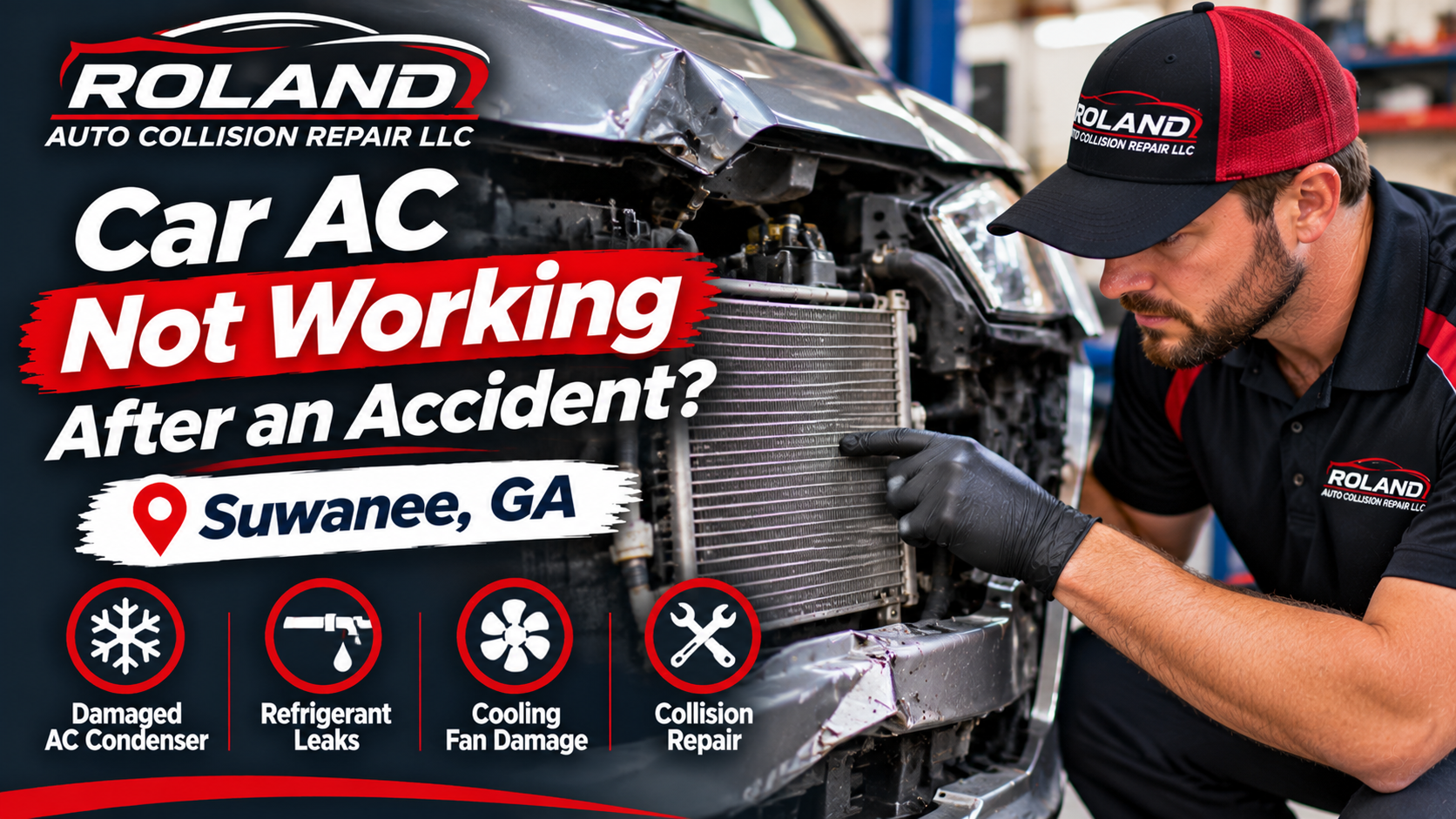
Damaged AC Condenser
One of the most common collision-related air conditioning problems involves the AC condenser.
The condenser is typically located near the front of your vehicle, behind the grille and in front of or near the radiator.
Because of its location, it can be vulnerable during front-end collisions.
A damaged condenser may develop cracks or leaks that allow refrigerant to escape.
Common symptoms include:
- Air conditioning blowing warm air
- Reduced cooling performance
- Visible damage behind the front bumper
- Oily residue around damaged AC components
- Cooling problems immediately after an accident
Even if the bumper damage appears minor, the condenser may have absorbed part of the collision impact.
Refrigerant Line Damage
Your vehicle's air conditioning system uses refrigerant lines to circulate refrigerant between major components.
During a collision, these lines can become bent, cracked, or disconnected.
A refrigerant leak can prevent the system from cooling properly.
Signs may include:
- Sudden loss of cold air
- Hissing near damaged AC components
- Oily residue around refrigerant connections
- Air conditioning that gradually stops cooling
A qualified automotive AC technician can perform appropriate leak testing and determine which components need repair.
Refrigerant systems should be serviced with proper recovery and handling equipment.
Cooling Fan Damage
Many vehicles use electric cooling fans to help move air through the radiator and AC condenser.
A front-end collision may damage the fan blades, motor, housing, wiring, or mounting brackets.
If the fan cannot operate correctly, the air conditioning system may struggle to cool, particularly when the vehicle is stopped.
Warning signs can include:
- AC cooling while driving but not while idling
- Unusual fan noises
- Engine temperature warnings
- Visible fan or shroud damage
A damaged cooling fan can also affect engine temperature regulation, making prompt inspection important.
Bent Radiator Support or Front-End Structure
A collision can shift or bend the structure supporting the radiator, condenser, and other front-end components.
Even when the outside of the vehicle looks relatively normal, internal mounting points may be damaged.
This can place pressure on AC components or interfere with airflow.
Common signs include:
- Misaligned front bumper
- Uneven hood gaps
- Damaged condenser mounting brackets
- Radiator or fan misalignment
- Unusual noises from the front of the vehicle
Professional collision repair involves evaluating both visible and hidden damage.
Electrical Wiring or Sensor Damage
Modern vehicles rely on electrical components to control air conditioning operation.
A collision may damage wiring harnesses, connectors, fuses, or sensors.
These problems can prevent the compressor or cooling fans from operating correctly.
Possible symptoms include:
- AC system failing to turn on
- Intermittent cooling
- Dashboard warning lights
- Electrical faults after the accident
- Cooling fans that do not operate normally
Proper diagnosis may require electronic scanning and electrical testing.
AC Compressor or Drive Component Damage
Although the compressor is not always directly exposed during a collision, impact forces can damage its mounting brackets, connections, or related components.
Depending on the vehicle, compressor operation may also be affected by electrical damage or other system faults.
A damaged compressor or related component can cause:
- Little or no cooling
- Unusual mechanical noises
- AC system shutdown
- Refrigerant circulation problems
An inspection can help distinguish accident-related damage from ordinary mechanical wear.
Hidden Damage Behind the Front Bumper
A front bumper cover may flex during an impact and return close to its original shape.
Unfortunately, that does not guarantee the components behind it are undamaged.
A collision can affect:
- AC condenser
- Radiator
- Cooling fans
- Front bumper reinforcement
- Wiring harnesses
- Mounting brackets
- Front-end structural components
This is why a professional collision damage inspection can be valuable even after a seemingly minor accident.
Can a Minor Fender Bender Damage Your Car's AC?
Yes.
A low-speed front-end collision can damage components located behind the bumper, grille, and radiator support.
The amount of visible exterior damage does not always reflect the full extent of the impact.
If your air conditioning worked normally before the accident but stopped cooling afterward, it is worth documenting the change and having the vehicle inspected.
Will Insurance Cover AC Damage After an Accident?
Accident-related AC damage may be covered by an applicable auto insurance policy or claim, depending on the circumstances and coverage.
Insurance companies generally evaluate whether the damage was caused by the collision or existed beforehand.
A detailed inspection and repair estimate can help document the condition of the affected components.
Coverage decisions are made by the insurer under the applicable policy.
What to Do If Your AC Stops Working After a Collision
If your air conditioning stops cooling after an accident:
- Document when the problem began.
- Check for visible front-end damage.
- Watch for engine temperature warning lights.
- Avoid operating the vehicle if overheating or serious fluid leaks are present.
- Schedule a professional collision damage inspection.
- Ask whether the AC condenser, cooling fans, wiring, and mounting components were affected.
If your vehicle is overheating, stop driving when safe and arrange appropriate assistance.
Frequently Asked Questions
Can a car accident cause the AC to stop working?
Yes. A collision can damage the condenser, refrigerant lines, cooling fans, wiring, or other components necessary for proper air conditioning operation.
Why does my AC blow warm air after a front-end collision?
A damaged condenser or refrigerant leak is one possibility. Electrical problems, fan damage, and other mechanical faults can also cause warm air.
Can a damaged bumper affect the air conditioning?
Yes. The AC condenser and related components are often positioned behind the front bumper and grille.
Is AC damage covered by collision insurance?
It may be covered when the damage is related to a covered accident. Coverage depends on the policy, claim circumstances, and insurer's assessment.
Where can I get collision damage inspected near Suwanee, GA?
Roland Auto Collision Repair LLC is located in Duluth, GA, and serves drivers from Suwanee and surrounding Gwinnett County communities.
Professional Collision Repair Near Suwanee, GA
If your vehicle's air conditioning stopped working after an accident, there may be hidden damage behind the front bumper or underneath the hood.
Roland Auto Collision Repair LLC provides professional auto body and collision repair services in Duluth, serving drivers from Suwanee, Lawrenceville, Johns Creek, Norcross, and nearby Gwinnett County communities.
Our team can evaluate collision-related damage and help determine the appropriate repair process, including when specialized mechanical or AC service is needed.
Contact Roland Auto Collision Repair LLC to discuss your vehicle's damage and schedule a collision repair estimate.
Need Collision Repair in Duluth?
Roland's Auto Collision is here to help with honest estimates, quality workmanship, and insurance claim assistance.