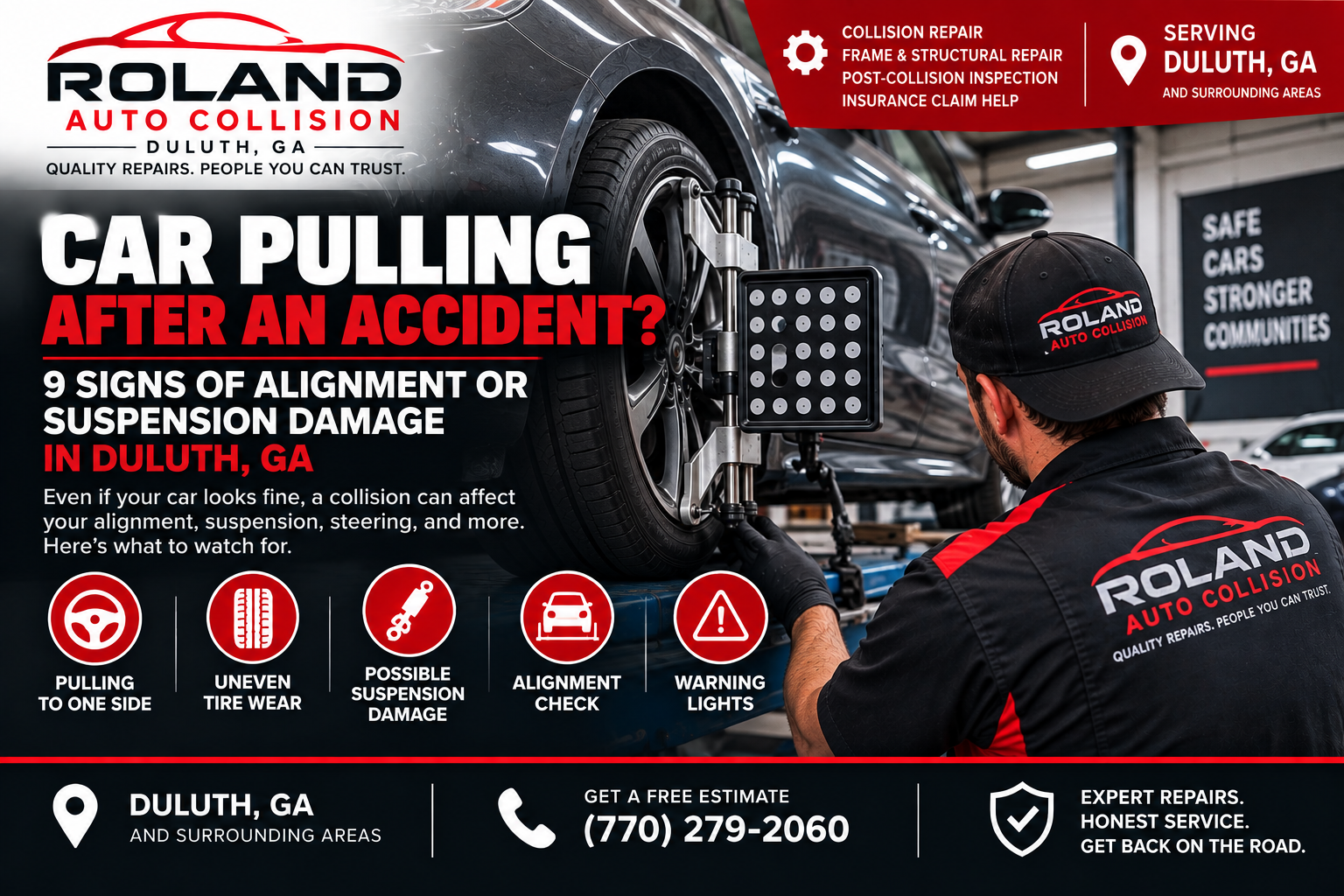
Car Pulling After an Accident? 9 Signs of Alignment or Suspension Damage in Duluth, GA
Your car may look fine after an accident and still drive differently than it did before the collision.
Maybe the steering wheel suddenly sits crooked. Perhaps the vehicle pulls to one side. You might notice a new vibration, unusual tire wear, or a clunk when driving over bumps.
Those symptoms shouldn't automatically be dismissed.
A collision can potentially affect the wheel alignment, suspension, steering components, wheels, tires, and surrounding vehicle structure.
At Roland Auto Collision in Duluth, GA, we know that collision damage isn't always limited to what you can see from outside the vehicle.
Here are 9 warning signs of possible alignment or suspension damage after an accident.
When you're driving on a relatively flat road, your vehicle shouldn't constantly require steering correction to stay straight.
If the car suddenly begins pulling left or right after a collision, something may have changed.
Possible causes can involve:
- Wheel alignment
- Suspension components
- Steering components
- Tire damage
- Wheel damage
- Collision-related structural changes
Because several issues can produce similar symptoms, an inspection is the best way to determine the cause.
Pay attention to the steering wheel when traveling straight.
If the steering wheel used to sit centered but now appears noticeably rotated while the vehicle is moving straight ahead, alignment may need to be checked.
This can occur after impacts involving a wheel, curb, front corner, or other area of the vehicle.
New vibration after a collision deserves attention.
You may feel vibration through the:
- Steering wheel
- Floor
- Seat
- Brake pedal
- Vehicle body
A collision can potentially damage or alter wheels, tires, suspension components, and other parts.
The speed at which the vibration occurs can also provide useful information during diagnosis.
Tire wear can reveal problems that aren't obvious from looking at the vehicle body.
After an accident, watch for:
- Excessive wear on one edge
- Uneven tread depth
- Rapid tire wear
- Feathered tread patterns
- One tire wearing differently from the others
Improper alignment can cause tires to wear unevenly and shorten their usable life.
However, uneven wear can have multiple causes, so the underlying problem needs to be identified.
A new clunk, knock, or metallic noise after a collision can indicate that something has changed underneath the vehicle.
You might hear the sound when:
- Turning
- Braking
- Accelerating
- Driving over bumps
- Entering driveways
- Traveling on uneven pavement
Don't assume a new noise will disappear on its own.
Tell the collision repair shop exactly when and where you hear it.
Drivers become familiar with how their own vehicle normally feels.
If the car suddenly feels loose, unstable, unusually sensitive, or difficult to keep straight after an accident, have it inspected.
Even if the exterior damage looks minor, collision forces can travel through components beyond the visible impact area.
Take a look at the wheels from several angles.
If one wheel appears to sit differently in the wheel opening compared with the opposite side, that's worth investigating.
You may notice:
- Wheel positioned farther forward or backward
- Uneven wheel gaps
- Wheel leaning inward or outward
- Tire rubbing
- Different ride height on one side
These observations don't diagnose the problem themselves, but they can indicate that a closer inspection is necessary.
After a collision, compare the vehicle's stance from the front and rear.
If one corner appears lower than the others, suspension components may need to be evaluated.
A change in ride height could indicate damage involving a spring, strut, shock, mounting point, or another component.
Avoid assuming the problem is merely cosmetic.
Modern vehicles contain numerous electronic safety and driver-assistance systems.
After an accident, you may see warning lights involving systems such as:
- ABS
- Traction control
- Stability control
- Tire pressure
- Steering
- Driver-assistance systems
A warning light doesn't necessarily tell you exactly which component was damaged.
Diagnostic scanning and inspection may be needed to determine why the warning appeared.
Can a Minor Accident Affect Alignment?
Yes, depending on where and how the vehicle was struck.
An accident doesn't have to destroy the front end to potentially affect wheel alignment.
Impacts involving a wheel, tire, curb, suspension area, or vehicle corner may affect alignment or related components.
That's why how the vehicle drives after the accident can be just as important as how it looks.
Is an Alignment All My Car Needs?
Not necessarily.
This is an important distinction.
If a suspension, steering, wheel, tire, or structural component is damaged, simply adjusting alignment specifications may not address the underlying problem.
The vehicle should first be inspected for collision-related damage.
Once damaged components are identified and repaired as appropriate, alignment can be evaluated as part of returning the vehicle to proper operating condition.
Suspension Damage Can Be Hidden
Your suspension system contains numerous components underneath the vehicle.
Depending on vehicle design, these can include:
- Control arms
- Struts
- Shocks
- Springs
- Tie rods
- Knuckles
- Bushings
- Ball joints
- Wheel bearings
- Subframes
Many aren't easily visible during a quick walk around the car.
That's why a vehicle that appears to have only bumper or fender damage can still warrant a more thorough inspection.
What If the Accident Damaged a Wheel or Tire?
Wheels and tires absorb significant forces during some collisions.
A tire may have sidewall damage, while a wheel can become bent or otherwise damaged.
If you experience vibration, air-pressure loss, visible wheel damage, or unusual handling after an accident, avoid assuming the issue is only alignment.
The wheel and tire should also be inspected.
What About ADAS Calibration?
Modern vehicles may use cameras, radar units, steering-angle information, and other sensors for Advanced Driver Assistance Systems.
Depending on the vehicle and the repairs performed, certain collision repairs may require ADAS calibration or other manufacturer-specified procedures.
Can Alignment or Suspension Damage Affect Tire Life?
Yes.
When wheel alignment is outside the appropriate specifications, tires can wear unevenly.
Replacing worn tires without addressing the underlying cause can result in the new tires developing similar wear patterns.
If abnormal tire wear begins after an accident, investigate why.
Why a Post-Accident Inspection Matters
Visible body damage tells only part of the story.
A collision repair inspection can evaluate the damaged exterior while also looking for indications that other components may have been affected.
This is especially important if you notice changes in:
- Steering
- Handling
- Ride quality
- Tire wear
- Vehicle stance
- Warning lights
- Unusual noises
Document these symptoms and tell your repair shop about them.
Collision Repair in Duluth, GA
If your vehicle pulls to one side, vibrates, has a crooked steering wheel, makes new noises, or simply doesn't drive the same after an accident, have the damage evaluated.
Roland Auto Collision provides professional collision and auto body repair for drivers throughout Duluth, GA, Gwinnett County, and surrounding communities.
We'll evaluate the collision damage and help determine what repairs are appropriate for your vehicle.
Don't assume an accident only damaged what you can see.
Contact Roland Auto Collision in Duluth, GA to schedule a collision repair estimate.
Need Collision Repair in Duluth?
Roland's Auto Collision is here to help with honest estimates, quality workmanship, and insurance claim assistance.