Why Is My Car Making Wind Noise After an Accident?
After a car accident, most drivers focus on visible damage like dents, scratches, broken lights, or damaged bumpers.
But what happens when your vehicle looks repaired and still doesn't sound the same?
If you've noticed a new whistling, rushing, or humming noise while driving, the problem may be related to collision damage affecting your vehicle's body panels, doors, windows, or weatherstripping.
For drivers in Duluth, GA, unusual wind noise after a collision can be an important sign that something is no longer fitting or sealing properly.
At Roland Auto Collision, we help drivers throughout Duluth and surrounding Gwinnett County communities identify collision-related body damage and understand their repair options.
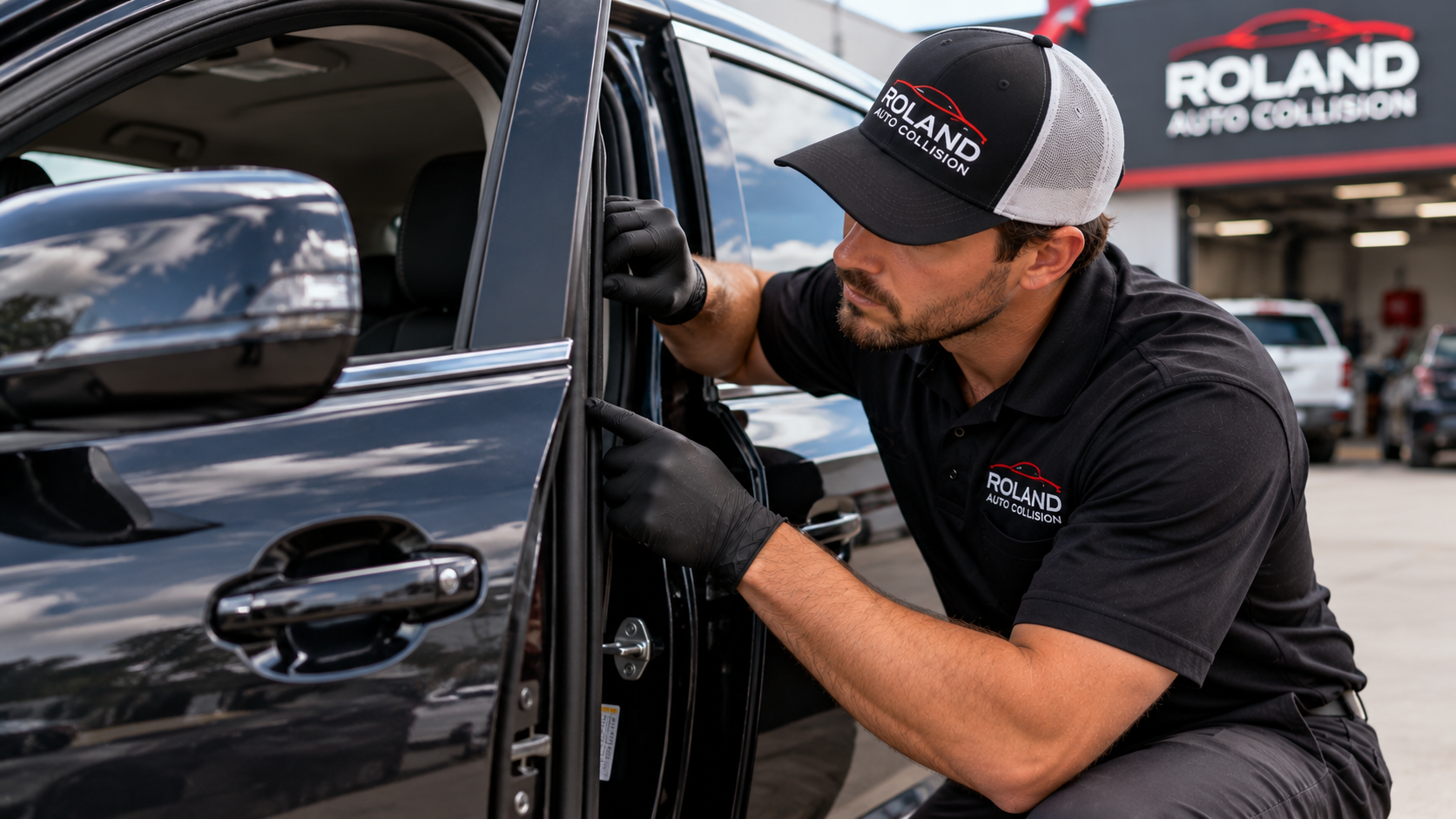
One potential cause of wind noise after an accident is a door that no longer sits correctly against the vehicle's body.
During a side impact or other collision, a door, hinge, striker, or surrounding body structure may shift.
Even a small change in alignment can affect how the door seals against the opening.
Warning signs of door misalignment
- Wind noise becomes louder at highway speeds.
- One door requires more force to close.
- The door sits unevenly compared with nearby panels.
- Gaps around the door appear inconsistent.
- Water enters the vehicle during rain.
A professional collision inspection can help determine whether the problem involves the door itself, its mounting components, or surrounding body structure.
Weatherstripping is the rubber sealing material installed around doors, windows, and other vehicle openings.
Its purpose is to help prevent wind, water, dust, and outside noise from entering the cabin.
During a collision, weatherstripping may become torn, displaced, compressed, or damaged.
Signs of damaged weatherstripping
- A whistling sound near the door
- Increased road and wind noise
- Water leaks during heavy rain
- Visible tears or gaps in rubber seals
- A door that no longer seals evenly
Replacing damaged weatherstripping may resolve the problem when the underlying body alignment is correct.
However, if the door opening is distorted, replacing the seal alone may not provide a lasting solution.
A collision can affect more than the exterior door panel.
Depending on the impact, window tracks, regulators, glass positioning, and surrounding frame components may also be affected.
If a window doesn't close completely or sit correctly against its seals, air may enter the cabin.
What drivers may notice
- Wind noise near the top of a window
- A window that moves unevenly
- Difficulty closing the glass completely
- Whistling at certain driving speeds
- Water entering around the window
A collision repair technician can inspect the window's alignment and surrounding components.
Modern vehicles use exterior trim pieces, moldings, and seals to help manage airflow around the body.
After an accident, some of these components may become loose, cracked, or improperly positioned.
At highway speeds, moving air can produce noticeable noise around damaged trim.
Potential problem areas include:
- Windshield moldings
- Door window trim
- Roof moldings
- Mirror mounting areas
- Exterior pillar trim
- Damaged underbody panels
Properly securing or replacing damaged components can help restore normal airflow and reduce noise.
Side mirrors can also contribute to wind noise after a collision.
If a mirror housing is cracked, improperly mounted, or missing trim pieces, air may move through gaps and create whistling sounds.
Sometimes the mirror still appears functional even though its housing or mounting area has been damaged.
A technician can inspect the mirror assembly and surrounding door components for proper fitment.
In more serious collisions, damage may extend beyond the exterior door panel.
The surrounding body structure, including pillars, rocker panels, and door openings, can become distorted.
When these areas are no longer correctly positioned, doors and windows may not seal as designed.
Why this matters
Door openings and surrounding structures play important roles in vehicle fit, function, and crash performance.
A professional collision repair shop can evaluate whether the vehicle requires additional measurements or structural repairs.
Wind noise often becomes more noticeable as vehicle speed increases.
At higher speeds, airflow around the vehicle becomes stronger.
Small gaps or improperly positioned seals can allow air to pass through areas that were previously sealed.
This may create whistling, rushing, or vibration noises.
If a new noise started immediately after an accident, documenting when and where it occurs can help a repair technician investigate the problem.
The diagnostic process depends on the vehicle and the symptoms.
Visual inspection
A technician examines door gaps, weatherstripping, trim, glass alignment, and visible collision damage.
Component fitment checks
The shop checks whether doors, windows, mirrors, and trim are correctly positioned.
Leak or airflow testing
When appropriate, technicians may use approved testing methods to identify air or water intrusion.
Collision damage assessment
If misalignment suggests deeper damage, additional measurements or disassembly may be required.
Repair and verification
Damaged components are repaired or replaced, and the shop verifies the affected systems according to applicable procedures.
FAQs About Wind Noise After a Collision
Why does my car whistle when I drive after an accident?
Whistling may result from air passing through damaged weatherstripping, misaligned doors, window gaps, or loose exterior trim.
Can a minor accident cause wind noise?
Yes. Even a relatively minor collision can affect panel alignment or damage sealing components.
Will replacing my door seal fix the wind noise?
It may, but only if the seal is the actual cause. If the door or surrounding structure is misaligned, additional repairs may be necessary.
Can wind noise indicate hidden collision damage?
Sometimes. New wind noise may indicate damage to door alignment, window components, or surrounding body structures.
Can an auto body shop diagnose wind noise?
Yes. A collision repair shop can inspect vehicle body components and determine whether collision-related damage is contributing to the noise.
Professional Collision Repair in Duluth, GA
If your car has developed new wind noise after an accident, don't assume it's something you have to live with.
At Roland Auto Collision, we help drivers identify collision-related damage and evaluate appropriate repair options.
We serve Duluth, Suwanee, Norcross, Lawrenceville, and surrounding Gwinnett County communities.
Whether your vehicle has damaged weatherstripping, misaligned doors, loose trim, or other collision-related problems, a professional inspection can help determine the cause.
Contact Roland Auto Collision today to schedule an auto body inspection in Duluth, GA.
Need Collision Repair in Duluth?
Roland's Auto Collision is here to help with honest estimates, quality workmanship, and insurance claim assistance.