How Do You Know If Your Car Has Frame Damage After an Accident? Duluth, GA Driver's Guide
After a collision, most drivers immediately notice the obvious damage: a cracked bumper, dented fender, broken headlight, or damaged hood.
What you can't see can be just as important.
An impact can potentially affect structural components beneath the exterior panels of a vehicle. Depending on the location and severity of the collision, damage may extend beyond what is visible from the outside.
That's why a professional collision repair inspection is important after an accident—even when the vehicle still runs and the exterior damage doesn't look severe.
At **Roland Auto Collision in Duluth, GA**, we help drivers throughout Duluth, Norcross, Johns Creek, Suwanee, Lawrenceville, Peachtree Corners, and Gwinnett County identify and properly repair collision damage.
Here's what Georgia drivers should know about frame and structural damage after a car accident.
What Is Frame Damage?
Your vehicle's structure provides the foundation that supports many of its major components and helps the vehicle manage forces during a collision.
Many modern passenger vehicles use **unibody construction**, meaning the body and structural framework are integrated rather than using a completely separate frame.
Because of this design, collision damage isn't always as simple as replacing a dented body panel.
An impact can potentially affect structural areas underneath the visible exterior.
The exact damage depends on several factors, including:
* Where the vehicle was hit * Direction of the impact * Speed and force of the collision * Vehicle design * Previous damage * Components affected during the crash
Professional inspection and measurements help determine the actual extent of the damage.
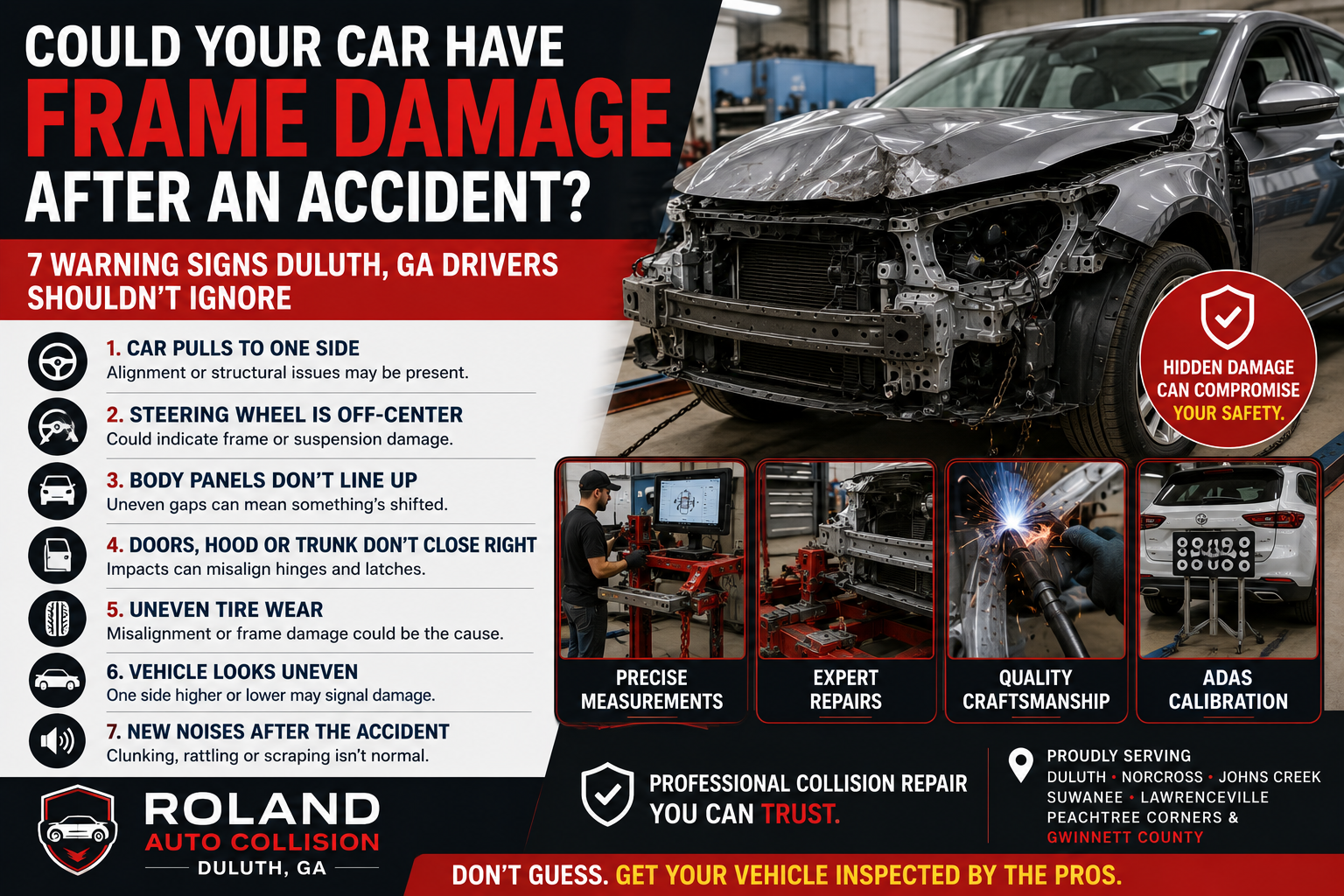
1. Your Car Pulls to One Side
After a collision, pay attention to how the vehicle drives.
If your car suddenly pulls toward one side while driving on a relatively straight road, something may have changed.
Possible causes can include alignment problems, suspension damage, wheel damage, steering issues, or structural changes.
A vehicle that drove straight before an accident but pulls afterward should be professionally inspected.
2. The Steering Wheel Is No Longer Straight
Another potential warning sign is a steering wheel that sits off-center when the vehicle is traveling straight.
This doesn't automatically prove the vehicle has frame damage.
However, when it begins immediately after a collision, it's worth investigating.
The cause could involve alignment, steering, suspension, or collision-related structural damage.
3. Body Panels Don't Line Up Correctly
One of the more visible signs of collision damage is inconsistent spacing between body panels.
Look around areas such as:
* Hood and fenders * Doors and quarter panels * Trunk and surrounding panels * Bumpers and fenders * Headlights and body panels
The gaps between panels should generally appear consistent.
After a collision, unusually large, narrow, or uneven gaps can indicate that components have shifted.
Simply making the outside look good isn't enough. The underlying reason for the misalignment should be identified.
4. Doors, Hood, or Trunk Don't Close Normally
Have you noticed that a door suddenly requires more force to close?
Does the hood no longer latch the way it did before the accident?
Is the trunk difficult to open or close?
These symptoms can occur when body panels, hinges, latches, mounting points, or surrounding structures have been affected.
Any noticeable change after an accident deserves attention.
5. Your Tires Begin Wearing Unevenly
Tire wear can reveal problems that aren't immediately obvious from looking at the body of the vehicle.
If alignment or suspension geometry has changed after a collision, tires may begin wearing unevenly.
You may notice:
* Excessive wear on one edge * One tire wearing faster * Steering pulling * Unusual handling * Vehicle vibration
Uneven tire wear has many possible causes, but if it begins after a collision, collision-related damage should be considered.
6. The Vehicle Looks Uneven
Look at the vehicle from the front, rear, and sides.
Does one side appear different?
Does one wheel seem positioned differently inside the wheel opening?
Does part of the vehicle appear to sit unusually high or low?
Visible asymmetry can sometimes indicate suspension, body, or structural damage.
7. You Hear New Noises After the Accident
A collision can affect far more than exterior sheet metal.
New noises may include:
* Clunking * Rattling * Scraping * Squeaking * Tire rubbing * Wind noise
The source might be relatively minor—or it could indicate that components have shifted or become damaged.
A new sound that begins immediately after a collision should not simply be assumed to be harmless.
Can a Minor Accident Cause Structural Damage?
It can.
The amount of visible exterior damage doesn't always tell the entire story.
Modern bumpers and exterior panels are designed differently than the underlying structural components. A bumper cover may flex or show relatively limited damage while components behind it absorb impact forces.
That's one reason estimating collision damage from photographs alone can have limitations.
Once damaged components are removed, additional damage may become visible.
Can Frame Damage Be Repaired?
Whether structural damage can be repaired depends on the specific vehicle, location of the damage, severity of the collision, manufacturer repair procedures, and other factors.
Professional collision repair isn't about simply "bending the car back."
The repair process may involve:
* Detailed inspection * Measuring affected areas * Removing damaged components * Identifying structural damage * Following appropriate repair procedures * Replacing components when necessary * Restoring panel alignment * Refinishing repaired areas * Checking safety-related systems
The goal is to address the damage correctly rather than simply make the exterior look better.
Why Proper Measurements Matter
A difference that is difficult to see with the naked eye can still affect panel alignment and other components.
Professional collision repair shops use appropriate measuring and repair procedures to determine whether important areas of the vehicle are positioned correctly.
This is particularly important with modern vehicles, where body structure, suspension geometry, sensors, and safety systems can work together.
Frame Damage and ADAS Systems
Modern vehicles may contain cameras, radar units, parking sensors, blind-spot monitoring systems, lane assistance technology, and other Advanced Driver Assistance Systems.
Collision repairs can involve more than metal and paint.
Depending on the vehicle and repair, certain ADAS components may require inspection, aiming, calibration, or other manufacturer-specified procedures.
This is another reason modern collision repair should be approached as a complete repair process.
Will Frame Damage Affect My Car's Value?
Accident history and the severity of damage can potentially affect a vehicle's resale or trade-in value.
That's one reason quality repairs and documentation matter.
Drivers should prioritize restoring the vehicle correctly rather than choosing a repair based solely on the lowest estimate.
Don't Judge Collision Damage by the Bumper
A bumper that "doesn't look that bad" doesn't necessarily mean nothing happened behind it.
Likewise, significant-looking exterior damage doesn't automatically mean a vehicle has severe structural damage.
The correct way to know is through a professional collision inspection.
Frame & Structural Collision Repair in Duluth, GA
If your vehicle has been involved in an accident, **Roland Auto Collision** can inspect the damage and help determine what repairs are necessary.
We provide professional collision and auto body repair for drivers throughout:
* Duluth, GA * Norcross, GA * Suwanee, GA * Johns Creek, GA * Lawrenceville, GA * Peachtree Corners, GA * Gwinnett County and surrounding communities
Whether you're dealing with bumper damage, body-panel damage, alignment concerns, hidden collision damage, or possible structural damage, getting the vehicle properly inspected is an important first step.
Need Collision Repair in Duluth?
Roland's Auto Collision is here to help with honest estimates, quality workmanship, and insurance claim assistance.