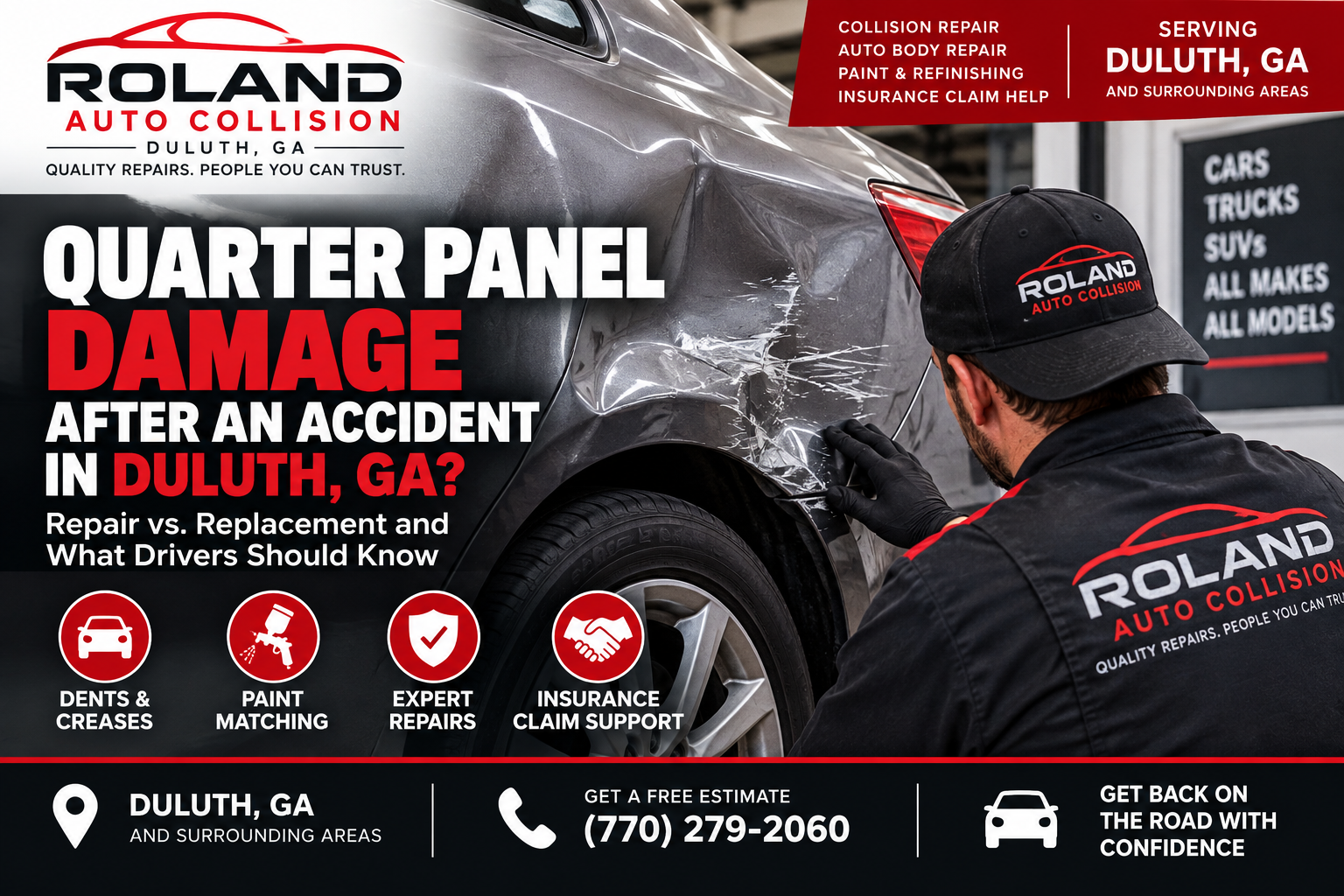
Quarter Panel Damage After an Accident in Duluth, GA: Repair vs. Replacement and What Drivers Should Know
After a car accident, damage to a quarter panel can look like nothing more than a dent or scrape. However, depending on the location and severity of the impact, quarter panel damage can be considerably more involved than ordinary cosmetic body damage.
For drivers in Duluth, GA, understanding how quarter panel damage is evaluated can help you know what to expect when taking your vehicle to a collision repair shop.
At Roland Auto Collision, we help drivers throughout Duluth and Gwinnett County evaluate collision damage and determine the appropriate repair process for their vehicles.
Here's what you should know if your vehicle has quarter panel damage after an accident.
What Is a Quarter Panel?
The quarter panel is the exterior body panel located toward the rear of a vehicle.
On many passenger vehicles, it surrounds or sits above the rear wheel and extends toward the rear of the vehicle.
Unlike some bolt-on body panels, quarter panels on many vehicles are integrated into the body structure. That can make repairing or replacing one more complicated than simply removing a damaged panel and installing another.
The exact construction varies by vehicle, which is why professional inspection matters.
What Causes Quarter Panel Damage?
Quarter panel damage can happen in many types of accidents.
Common causes include:
- Side-impact collisions
- Parking lot accidents
- Vehicles sideswiping each other
- Rear-corner impacts
- Backing into another vehicle or object
- Hitting a pole, wall, or guardrail
- Debris striking the vehicle
- More serious rear-end accidents
The visible dent may only represent part of the damage.
A collision can potentially affect components behind or around the quarter panel as well.
A shallow dent and a deep, sharply creased panel are very different repair situations.
When metal is significantly stretched or folded during an impact, restoring the original contour can become more difficult.
Technicians evaluate the size, depth, location, and shape of the damage before deciding whether repairing the existing panel is practical.
Quarter panels often surround the rear wheel opening.
Damage in this area deserves particular attention because the impact may have affected more than the exterior sheet metal.
A collision repair inspection may also look for problems involving nearby components and wheel alignment.
If the wheel appears shifted, the vehicle handles differently, or the tire begins wearing abnormally after an accident, tell the repair shop.
Even when a quarter panel dent appears relatively minor, the paint finish may have been damaged.
Look for:
- Cracked paint
- Chipped paint
- Scratches
- Exposed metal
- Paint separation
Damage to the finish needs to be addressed as part of restoring the panel.
Professional refinishing also involves matching the repaired area with the surrounding factory finish as closely as possible.
Collision forces don't always stop at the most obvious dent.
Quarter panel damage may occur alongside damage to the:
- Rear bumper
- Trunk or liftgate
- Rear door
- Rocker panel
- Tail light
- Wheel opening
- Inner body components
That's one reason an estimate based solely on a quick glance at the exterior may change once the vehicle is properly inspected.
Panel gaps can provide important clues after a collision.
If your trunk, hatch, or rear door suddenly doesn't open or close normally, the impact may have shifted or damaged surrounding components.
You might notice:
- Uneven gaps
- Rubbing between panels
- Difficulty closing the trunk
- A rear door that sticks
- Panels sitting higher or lower than before
These symptoms should be evaluated rather than dismissed as cosmetic.
Quarter panel damage near the rear corner of a vehicle can affect the area surrounding the tail light assembly.
After a collision, you might notice that the light:
- Sits unevenly
- Has a larger gap around one side
- Is cracked
- Has broken mounting points
- Allows moisture inside
Proper repair involves restoring the surrounding area so components fit correctly.
A collision can loosen components even when the exterior damage appears limited.
If you begin hearing rattling, vibration, or unusual road noise from the rear of the vehicle after an accident, mention it during your inspection.
The noise may or may not be connected to the quarter panel itself, but it can help technicians identify additional damage.
Can a Quarter Panel Be Repaired?
In many cases, yes.
Whether repair is appropriate depends on factors such as:
- Severity of the dent
- Location of the damage
- Amount of metal deformation
- Presence of sharp creases
- Condition of the surrounding structure
- Vehicle construction
- Accessibility of the damaged area
Less severe damage may be repairable while preserving the original panel.
More extensive damage may require a different approach.
When Does a Quarter Panel Need Replacement?
Replacement may be considered when damage is too extensive for an appropriate repair.
Examples can include severe deformation, extensive tearing, significant structural involvement, or damage that prevents the original panel from being restored appropriately.
Quarter panel replacement can be a detailed collision repair procedure because the panel may be integrated into the vehicle body.
The process can involve removing damaged material, preparing attachment areas, installing the replacement panel, corrosion protection, refinishing, and checking surrounding components.
Quarter Panel Repair vs. Paintless Dent Repair
Some drivers wonder whether quarter panel dents can simply be repaired with paintless dent repair (PDR).
PDR can be useful for certain dents when the paint remains intact and the metal hasn't been severely stretched or creased.
However, not every collision dent is a PDR candidate.
If the paint is damaged, the panel is sharply creased, access is limited, or the collision caused more extensive damage, traditional auto body repair may be necessary.
Will Insurance Cover Quarter Panel Damage?
Coverage depends on your insurance policy, the circumstances of the accident, liability, deductibles, and other factors.
If you're filing an insurance claim, the insurer may prepare an initial estimate based on visible damage.
Additional collision damage can sometimes become apparent during the repair process after damaged components are removed.
When that happens, the repair shop may document the additional damage as part of the insurance repair process.
Why Proper Paint Matching Matters
Repairing the metal is only part of restoring a damaged quarter panel.
The refinished area also needs to visually integrate with the surrounding vehicle.
Modern automotive paint matching can involve:
- Identifying the vehicle's paint code
- Evaluating the existing finish
- Mixing the appropriate color
- Spray-out testing when necessary
- Applying basecoat and clearcoat
- Blending when appropriate
- Inspecting the finished repair
Color matching becomes especially noticeable on large exterior panels such as quarter panels.
Don't Judge Quarter Panel Damage by the Dent Alone
After a collision, the largest visible dent naturally gets most of the attention.
But a professional inspection considers the surrounding areas as well.
The goal isn't simply to make a dent disappear. It's to identify the collision damage and restore the affected areas appropriately.
Quarter Panel Repair in Duluth, GA
If your vehicle has a dented, scraped, creased, or damaged quarter panel after an accident, Roland Auto Collision can inspect the damage and explain your repair options.
Our Duluth collision repair team serves drivers throughout Duluth, Gwinnett County, and surrounding areas with professional auto body and collision repair.
Whether you've experienced a parking lot accident, side impact, rear-corner collision, or more substantial crash, we'll evaluate the visible and potentially hidden damage before developing the repair plan.
Contact Roland Auto Collision in Duluth, GA to schedule a collision repair estimate.
Need Collision Repair in Duluth?
Roland's Auto Collision is here to help with honest estimates, quality workmanship, and insurance claim assistance.